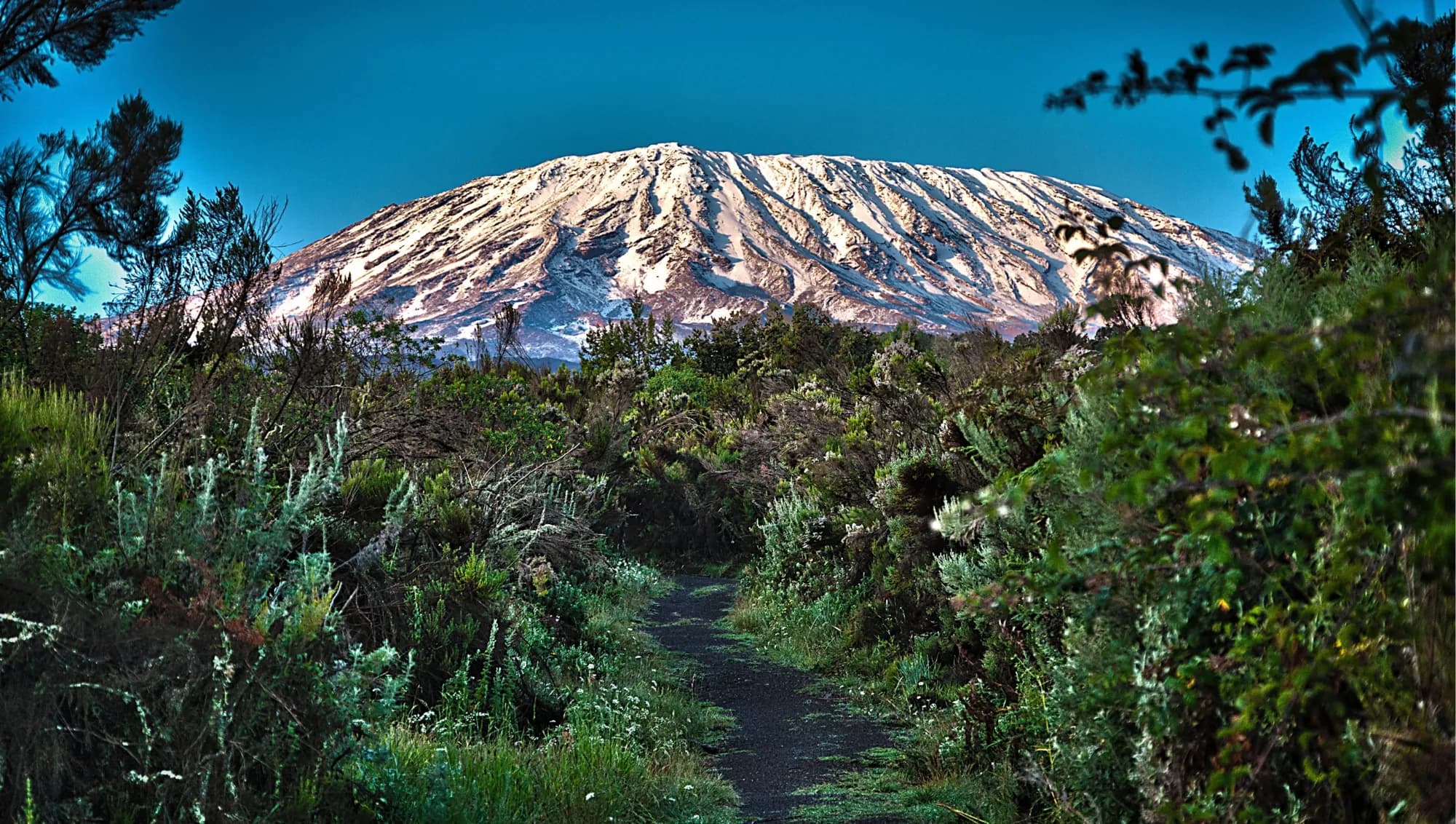
What the Marangu route is
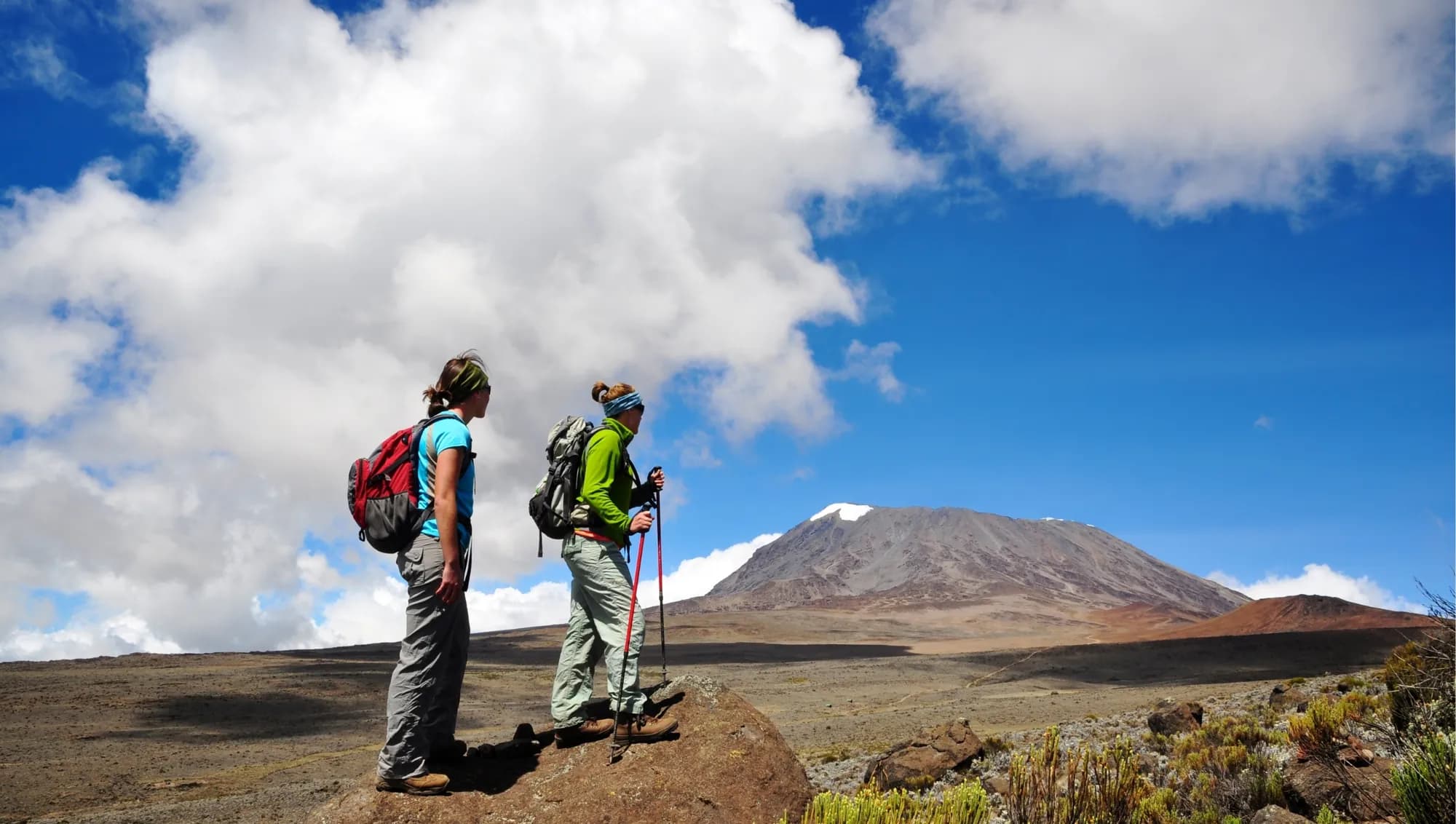
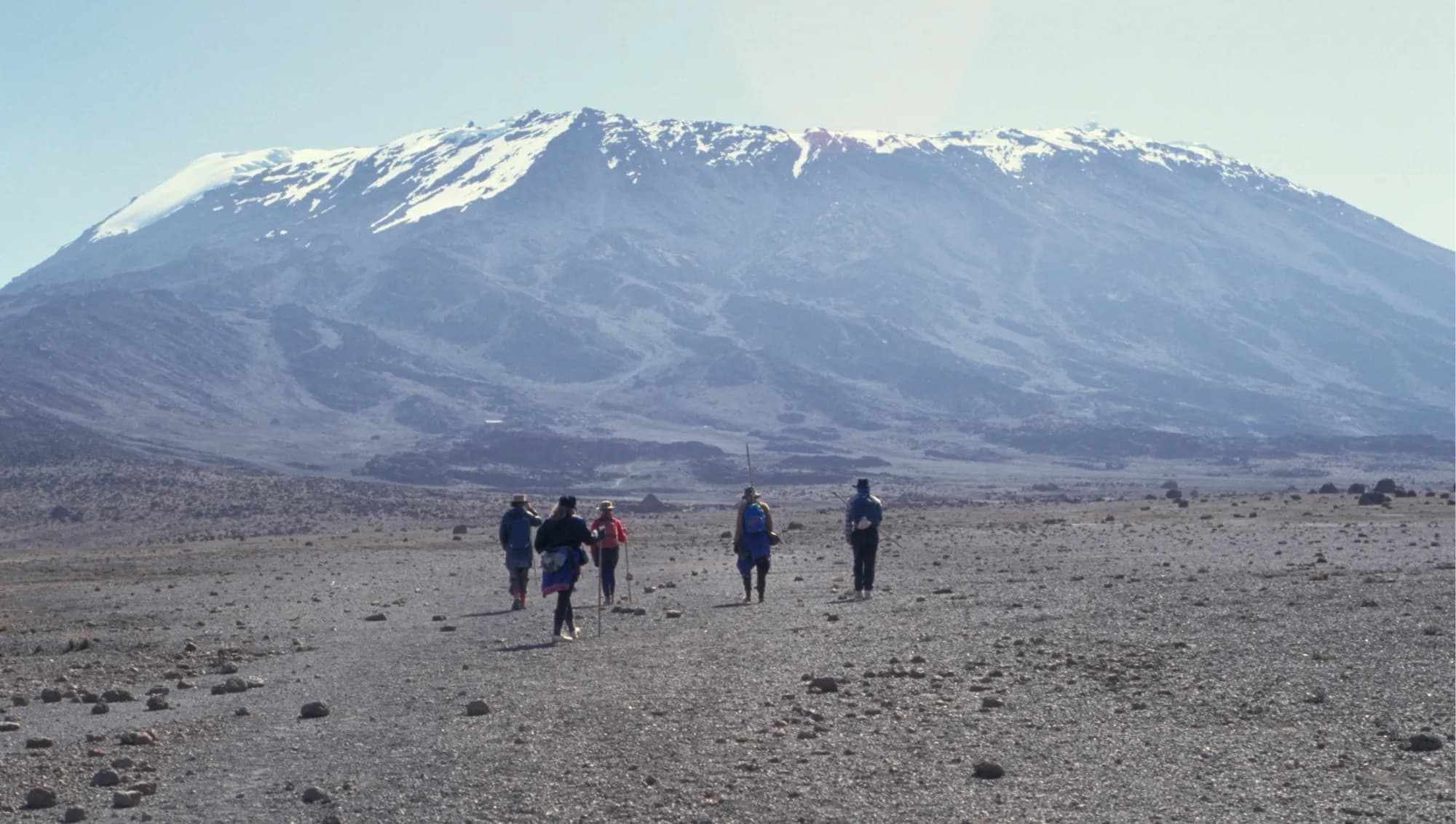
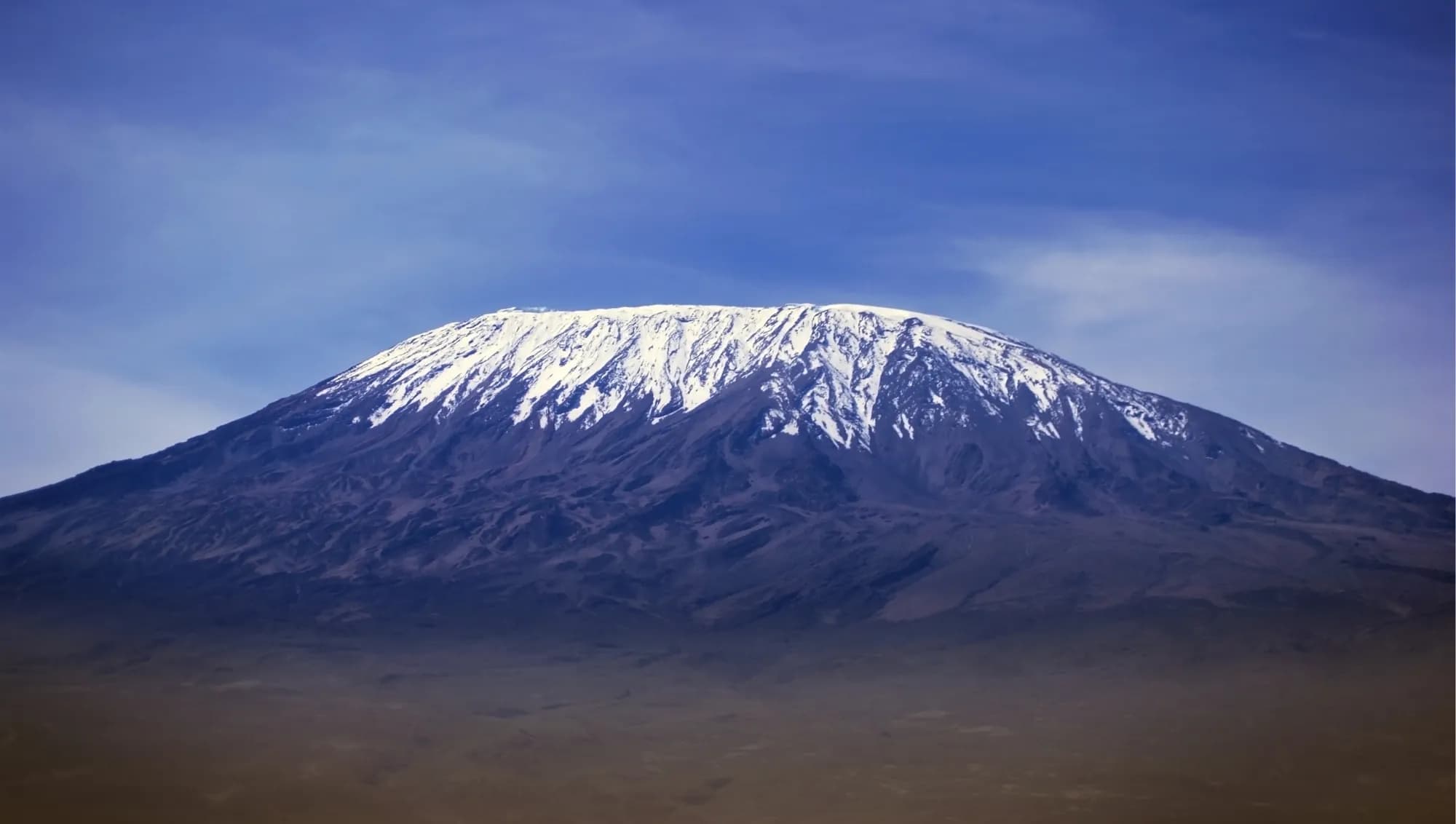
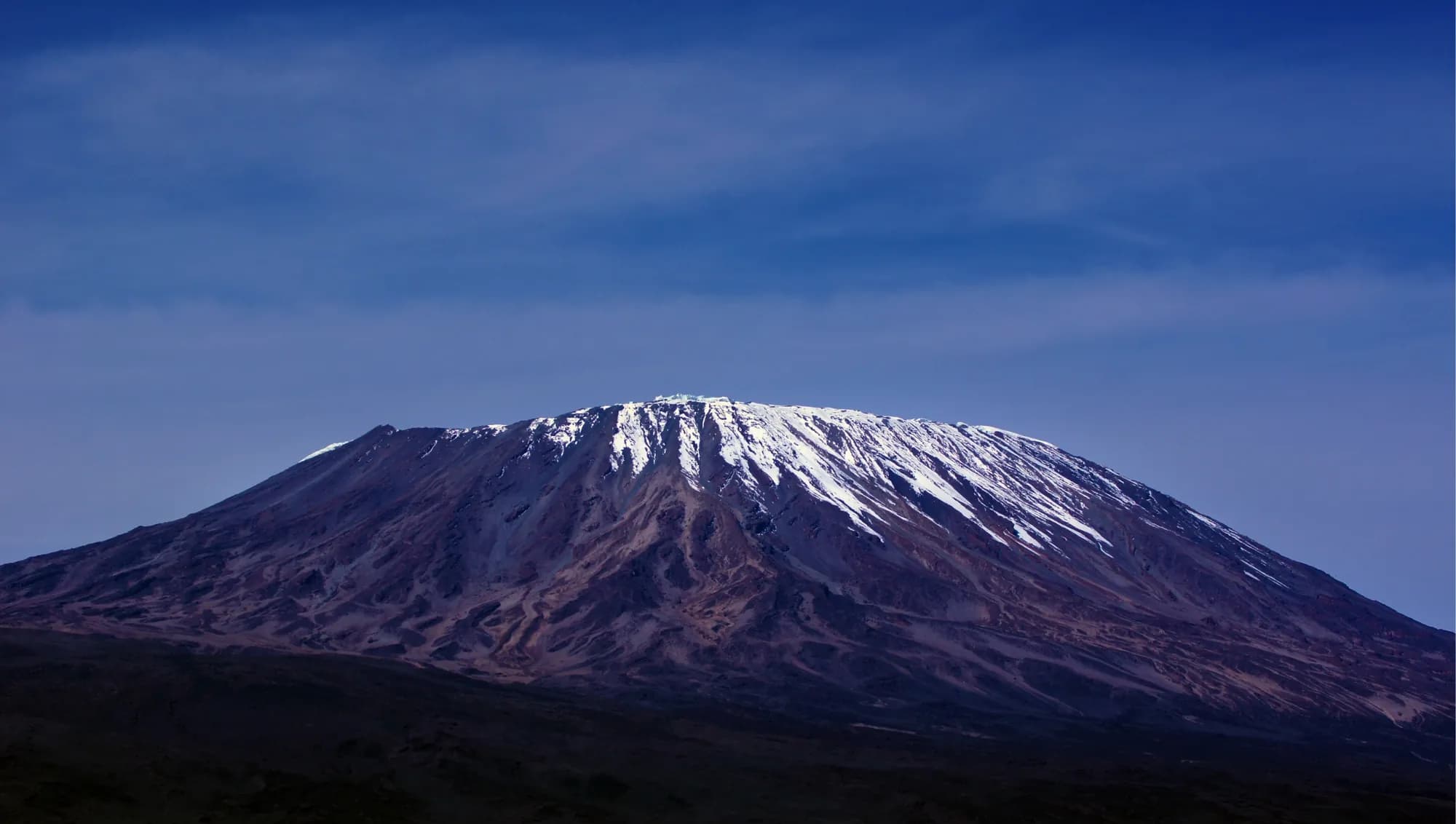
The Marangu route is the only Kilimanjaro route where you sleep in huts instead of tents. It climbs the south-eastern side of the mountain from Marangu Gate, crosses the high Saddle between Kilimanjaro's two summits, and reaches Uhuru Peak, 5,895m (19,341 ft), via Gilman's Point. It is the oldest route on Kilimanjaro and is nicknamed the "Coca-Cola route", partly because soft drinks were once sold at the huts and partly because of its reputation as the easy option.
That reputation is misleading. The gradients are gentle and the path is wide, but the standard five-day Marangu climbs fast, and fast ascents are what cause altitude sickness. Our six-day itinerary adds a second night at Horombo Hut, 3,720m (12,205 ft), with an acclimatisation hike, which is the single most useful change you can make to this route. Even so, its summit-success rate (65%) is below that of the longer camping routes.
You walk about 77km (48 miles) in total, including the acclimatisation hike, and you go up and down by the same trail apart from the summit section.
Who the Marangu route suits, and who it doesn't
Marangu makes sense if:
- You really don't want to camp. A bunk, a solid roof and a dining hall make a real difference to some people, especially in wet weather.
- You are climbing in the rainy months. A dry hut beats a wet tent in April, May or November.
- You want a gentle, well-graded path. There are no scrambles and no steep forest sections.
- You are on a tighter budget. It is the lowest-priced route we run.
Choose another route if:
- Your priority is reaching the summit. The Lemosho route and the Northern Circuit have far better acclimatisation profiles and higher success rates.
- You want quiet trails. Marangu is one of the busiest routes, and the huts are shared with other groups.
- You want variety. You see the forest and moorland twice. The Rongai route descends the Marangu trail too but climbs a different, quieter side of the mountain.
Five days or six on Marangu?
The five-day Marangu goes Mandara, Horombo, Kibo, summit. That means sleeping at 4,703m (15,430 ft) on the third night, after two back-to-back gains of about 1,000m in sleeping altitude. Altitude-medicine guidelines advise raising your sleeping altitude by no more than about 500m a day above 3,000m (9,800 ft), with extra time every three to four days (Wilderness Medical Society, 2024 update). The five-day version ignores that entirely.
Research on this route shows the cost. In a study of trekkers on Marangu, 77% of the 181 with complete data developed acute mountain sickness (AMS) and 61% reached the summit (Davies et al., Wilderness & Environmental Medicine, 2009). A separate study of Finnish trekkers on Marangu found AMS in 75% and pointed to the rapid ascent as the main cause (Karinen et al., High Altitude Medicine & Biology, 2008).
That is why we only sell the six-day version. The extra day at Horombo doesn't make Marangu a high-success route, but it gives you a far better chance than the five-day dash.
The acclimatisation profile
- Night 1, Mandara Hut, 2,720m (8,924 ft).
- Night 2, Horombo Hut, 3,720m (12,205 ft): a 1,000m jump in sleeping altitude.
- Night 3, Horombo Hut again: after a morning hike higher toward the Mawenzi ridge. This is the climb-high, sleep-low day.
- Night 4, Kibo Hut, 4,703m (15,430 ft): another jump of almost 1,000m, straight to summit base.
- Summit, 5,895m (19,341 ft), then night 5 back at Horombo.
Compare that with the Lemosho route, which spends three nights between 3,800m and 4,000m before high camp. That difference explains most of the gap in summit-success rates.
Summit night via Gilman's Point
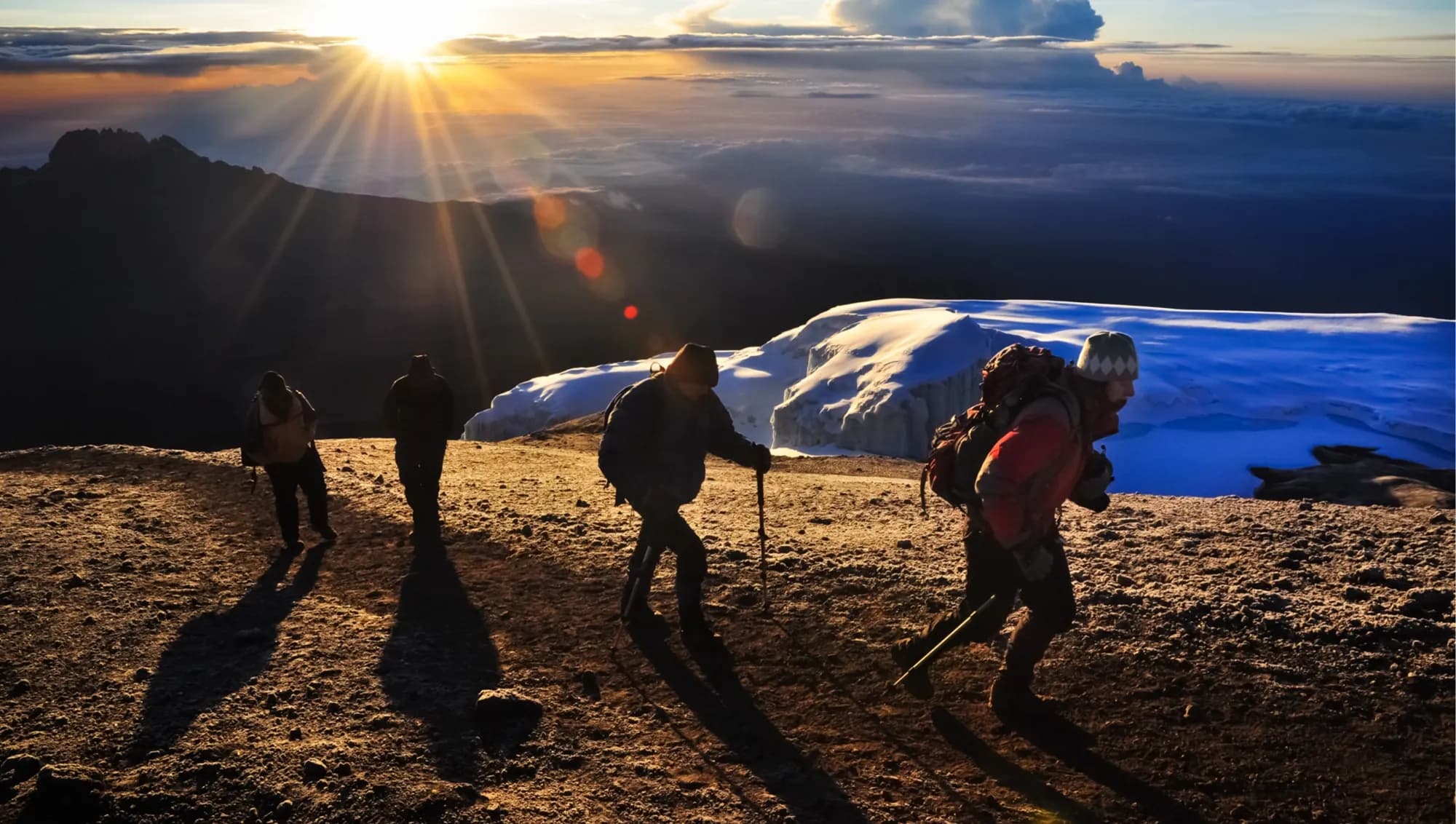
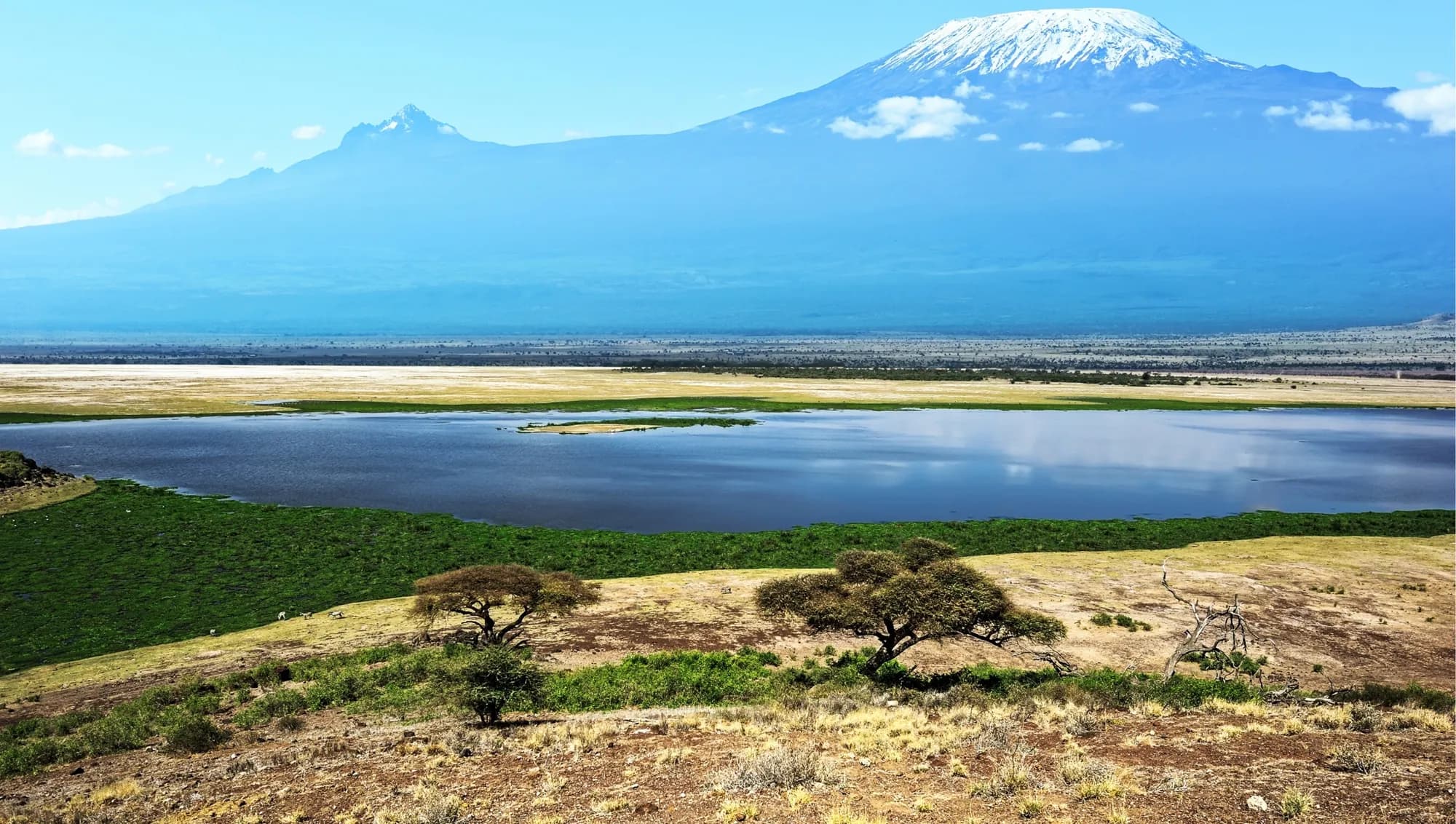
Your guide wakes you at Kibo Hut around 11 p.m. You leave at about midnight and climb by headlamp up steep zig-zags of scree, past Hans Meyer Cave, to Gilman's Point on the crater rim, 5,685m (18,652 ft). That section gains almost 1,000m (3,200 ft) and takes five to seven hours. Many climbers reach Gilman's around sunrise, with Mawenzi silhouetted against the sky to the east, one of the finest summit-morning views on the mountain.
Gilman's Point counts as reaching the crater rim, and the park issues a certificate for it. Uhuru Peak, the true summit, is another 1.5 to 2 hours around the rim past Stella Point. Your guide will judge, with you, whether you have the strength to continue. Temperatures range from about −10°C to −20°C (14°F to −4°F) before wind chill.
After the summit you return to Kibo Hut to rest and eat, then descend to Horombo. It is the longest day of the trip. The summit-night section of our planning guide describes it hour by hour.
Best months to climb Marangu
- January to early March and June to October are the main climbing seasons, with the clearest weather.
- April, May and November are wet. Marangu is one of the better routes in these months because you sleep in huts, though the trails are muddy and the views often close in.
See best time to climb Kilimanjaro for a month-by-month view.
How to prepare for the Marangu route
The Marangu path is gentle, so leg strength matters less than stamina. The longest days are the walk from Mandara to Horombo (about 12km), summit day (about 22km, up and down) and the 20km descent on day six. Build up to back-to-back hikes of five to six hours, ideally with some long downhill sections, because the final two days are hard on the knees. Bring trekking poles.
What you can't train is your response to altitude. That is why the Horombo acclimatisation day matters: walk the hike your guide suggests even if you feel fine, drink three to four litres of water a day, and tell your guide about any symptoms early. Our training guide sets out a 12-week plan.
What's included
Your price covers park, hut and rescue fees and VAT; a KPAP-compliant guide team and porters; all meals and drinking water on the mountain; shared hut accommodation; pulse-oximeter monitoring; and transfers between Moshi and Marangu Gate. The full list is in the inclusions section below.
You still need your own sleeping bag (or a rental), trekking gear and crew tips. The huts are unheated, and Kibo Hut is cold at night. See our Kilimanjaro gear list and tipping guide.
How we keep you safe
Because Marangu ascends quickly, safety management matters even more than on the longer routes:
- Guide team: a lead guide with assistant guides, so one guide can turn back with a climber while the group continues.
- Daily pulse-oximeter checks: blood-oxygen saturation, pulse and a symptom check, recorded each day.
- Firm turnaround rules: worsening headache despite painkillers, vomiting, confusion, loss of balance or breathlessness at rest means descent.
- Evacuation: the park rescue fee is included. Your travel insurance must cover trekking to 6,000m (19,700 ft) and helicopter evacuation.
Talk to your doctor about acetazolamide (Diamox) before you travel. Our altitude sickness overview explains the warning signs.
Porter welfare on the hut route
Huts reduce what porters carry, since there are no tents, but they still carry food, fuel, water and your duffel. The Kilimanjaro Porters Assistance Project (KPAP) standard is a maximum load of 20kg (44 lb) excluding the porter's own kit, three meals a day, proper sleeping gear and shelter, and wages paid promptly (KPAP guidelines). We follow it on every route. Ask any operator whether it is a KPAP partner before you book. Our sustainability page explains how we work with our crews.
- Hut accommodation throughout (no tents)
- Up and down the same trail, with a different summit approach via Gilman's Point
- The original Kilimanjaro climbing route
- Our six-day version adds an acclimatisation day at Horombo Hut