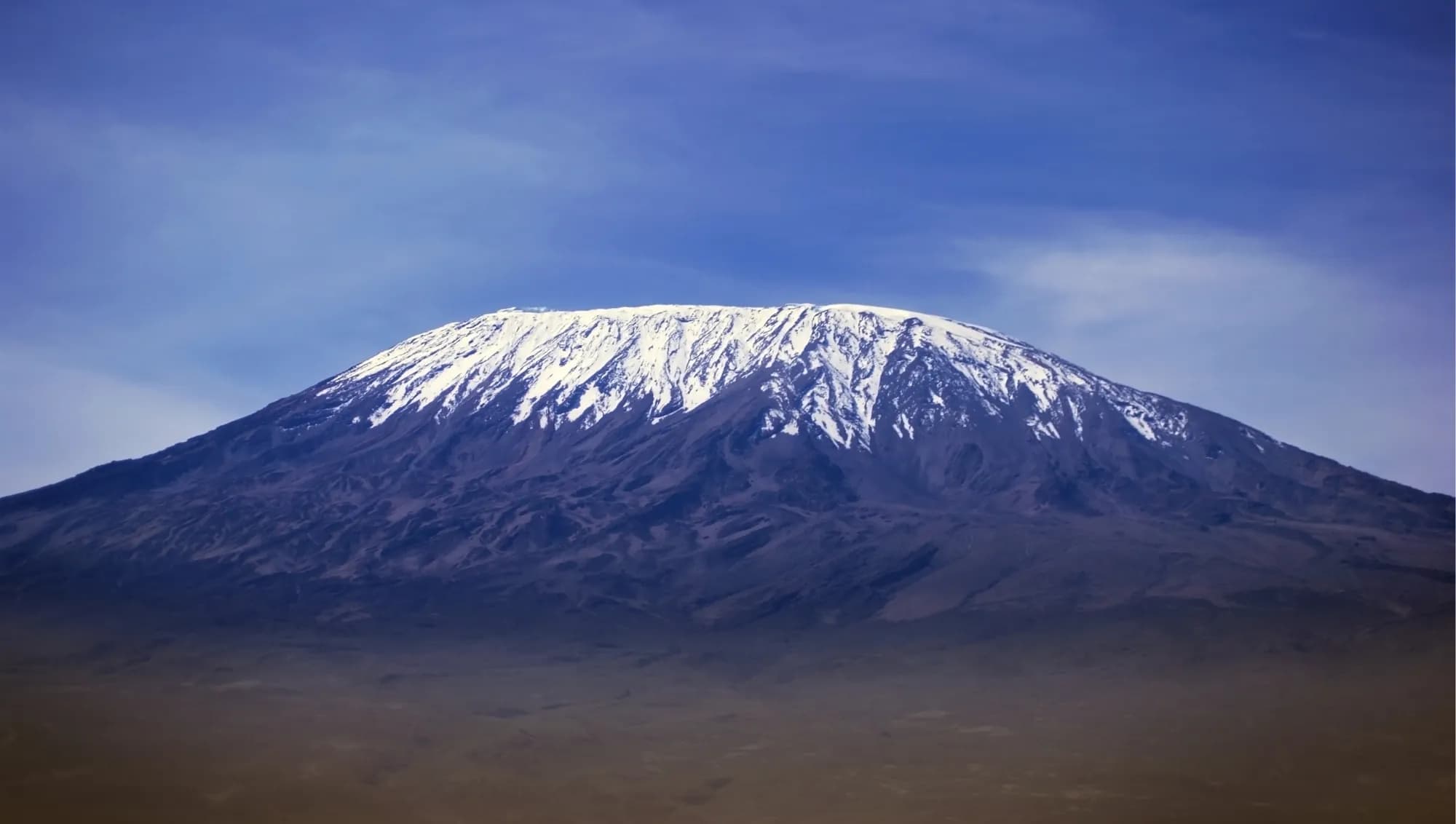
What the Umbwe route is
The Umbwe route is the steepest and shortest of Kilimanjaro's standard routes. It climbs straight up the southern slopes on a narrow forested ridge, joins the Machame and Lemosho trails at Barranco Camp on day two, and follows them to Uhuru Peak, 5,895m (19,341 ft), via Stella Point on the fifth night. The six-day itinerary covers about 53km (33 miles), the least of any route we run.
It is a spectacular, quiet climb. It is also the route with the lowest summit-success rate on the mountain, around 55%, because it gains altitude faster than the body adapts. We run it for experienced climbers who know what they are signing up for, and we will steer first-timers elsewhere.
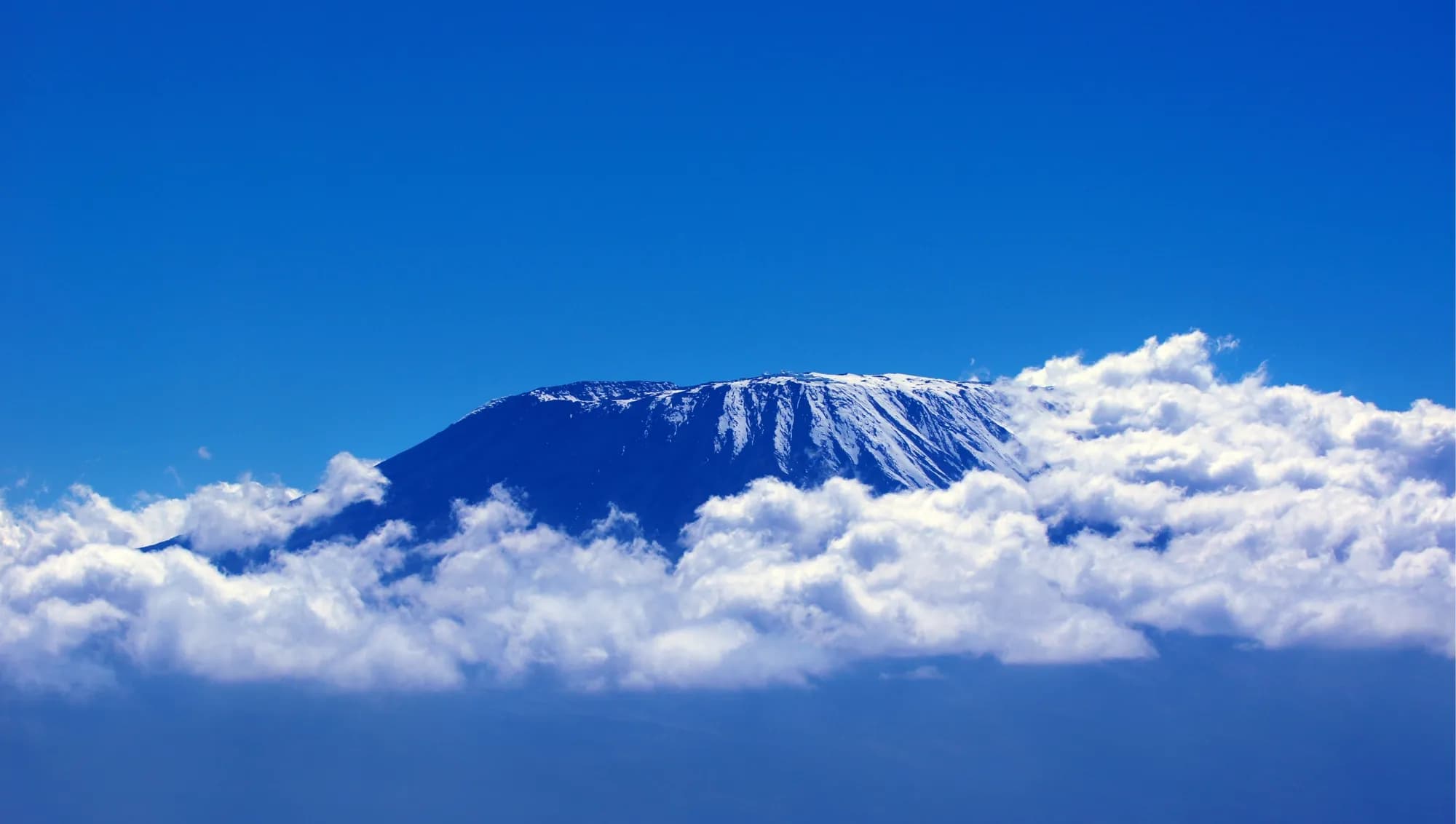
Who the Umbwe route suits, and who it doesn't
Umbwe can be right for you if:
- You have recent high-altitude experience. A trek above 4,000m in the past few months, or expeditions such as Everest Base Camp or Aconcagua, means you know how your body responds.
- You want a physical challenge. The first two days are among the steepest trekking on any of Africa's big mountains.
- You value solitude. You may see no other group until Barranco.
- You are short on time and accept the trade-off in summit odds.
It is the wrong route if:
- This is your first climb above 4,000m. Take the Lemosho or Machame seven-day route instead. Their success rates (90% and 85%) are 30 to 35 percentage points higher.
- You are uneasy on steep, exposed ground. Day two follows a narrow ridge with drops on both sides.
- You are climbing in the rainy season. The steep forest trail becomes slick and muddy; the drier Rongai route is a better choice in April, May and November.
Umbwe vs Machame
From Barranco onwards, Umbwe and Machame are identical: the Barranco Wall, Karanga, Barafu, the summit via Stella Point and the Mweka descent. The difference is how you get to Barranco.
Machame takes three days to reach Barranco, sleeping at Machame Camp and Shira 2 and climbing to the Lava Tower, 4,630m (15,190 ft), before descending to sleep. Umbwe gets there in two days, by a far steeper path, with no climb-high, sleep-low day. That missing day is the main reason Machame's seven-day success rate is 85% and Umbwe's is around 55%. If you like the idea of Umbwe's quiet, dramatic start but want better odds, Machame or Lemosho is the safer bet.
The acclimatisation profile
The Wilderness Medical Society's guidelines recommend raising your sleeping altitude by no more than about 500m a day above 3,000m (9,800 ft), with extra time built in every three to four days (Luks et al., 2024 update). Umbwe breaks that rule harder than any other route:
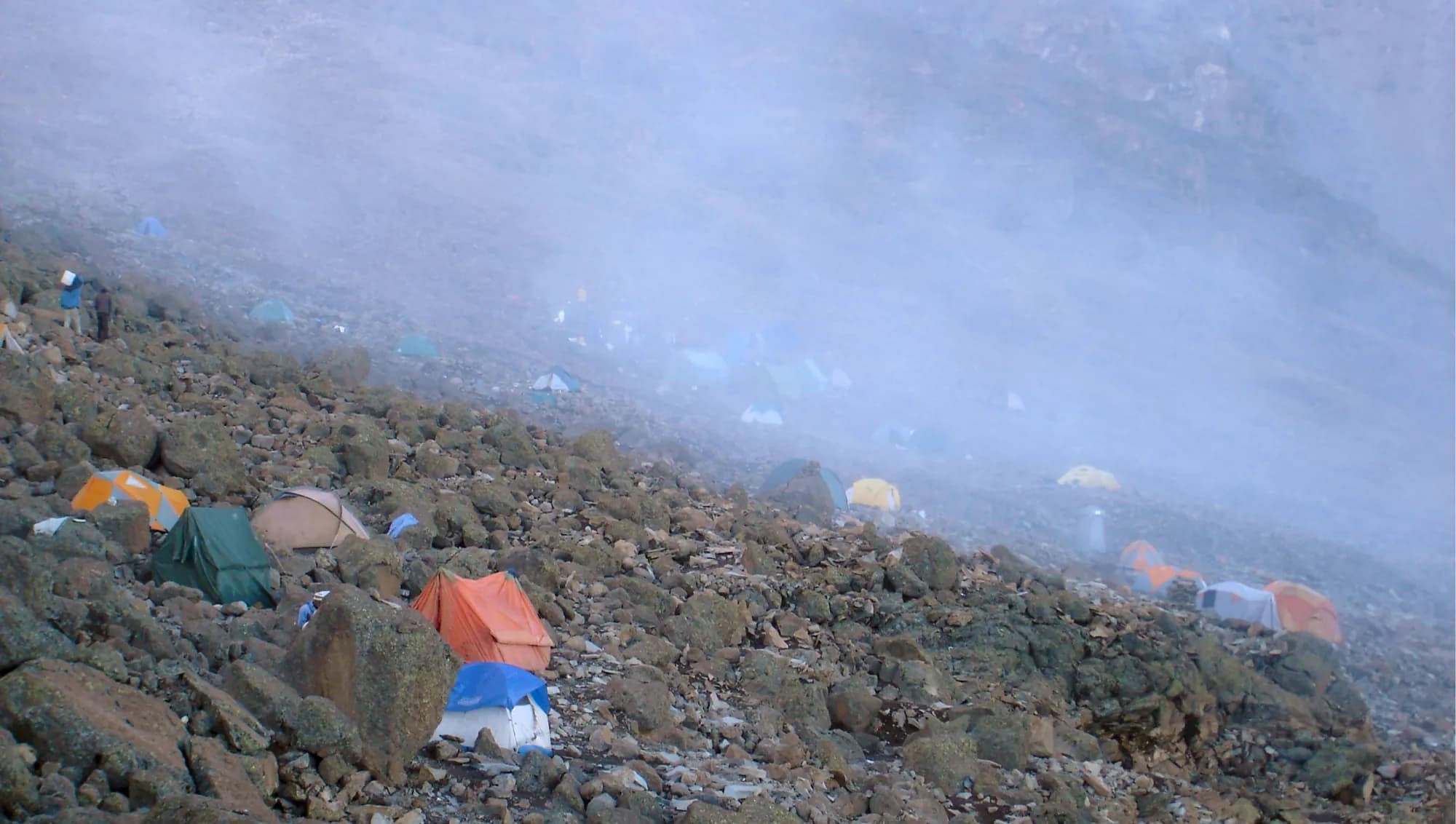
- Night 1, Umbwe Cave, 2,940m (9,646 ft): about 1,340m above the gate in a single day.
- Night 2, Barranco, 3,950m (12,959 ft): another jump of about 1,010m, with no higher point reached first.
- Night 3, Karanga, 3,995m (13,107 ft): a near-rest night, the route's only real recovery.
- Night 4, Barafu, 4,673m (15,331 ft): high camp.
- Summit, 5,895m (19,341 ft), then night 5 at Mweka Camp, 3,100m (10,171 ft).
The official breakdown from Kilimanjaro National Park, collected in the early 2000s and reported by Altezza Travel, showed a 44% summit rate on six-day climbs against 64% on seven-day climbs and 85% on eight-day climbs. Today's standards are better, but the lesson is the same: fewer days at intermediate altitude means fewer people on the summit.
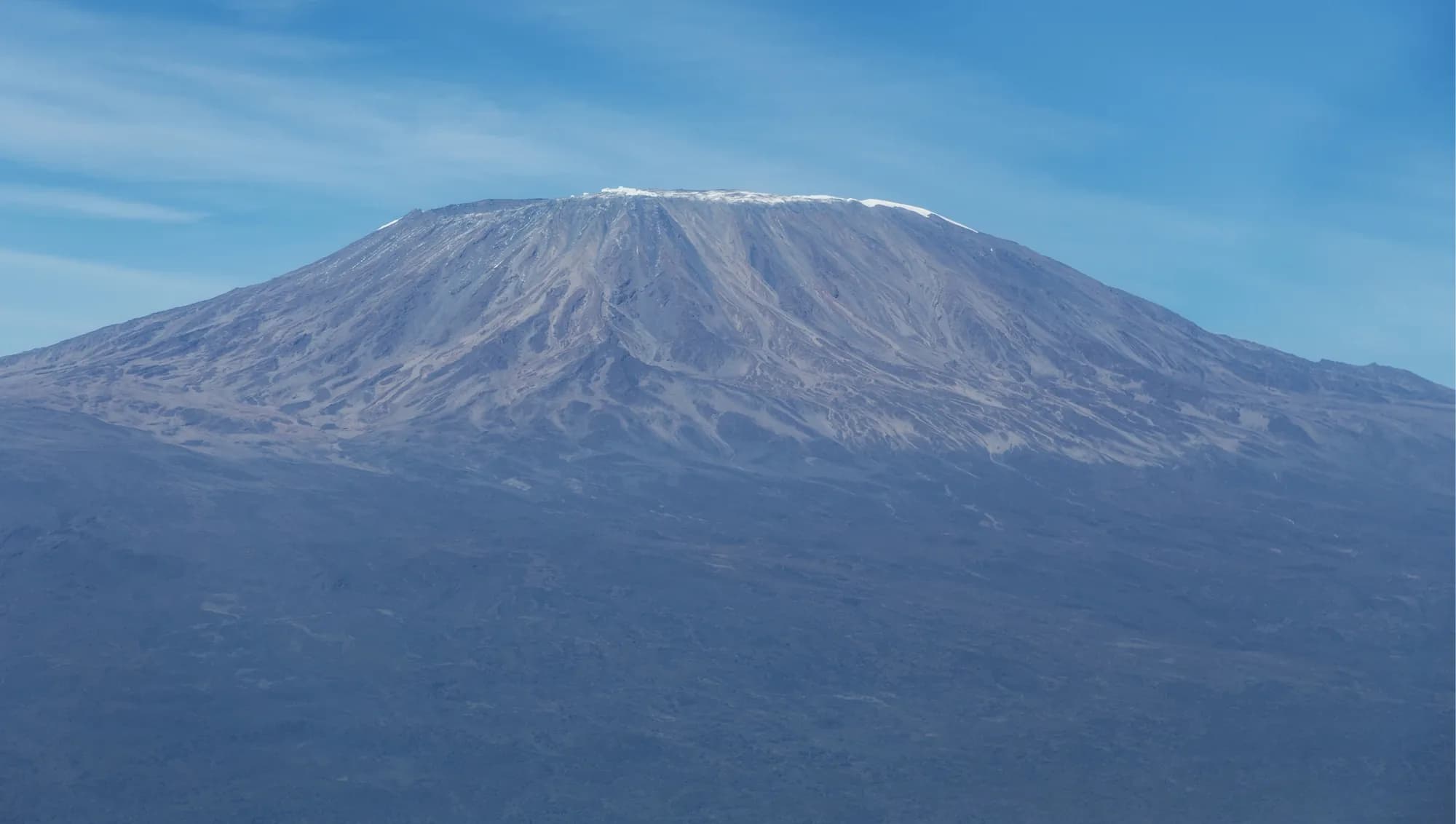
The Umbwe trail
Day one is steep forest. A ridge between two river gorges rises sharply from the gate, and in places tree roots form the steps. The forest is dense and quiet, and you are unlikely to meet other groups.
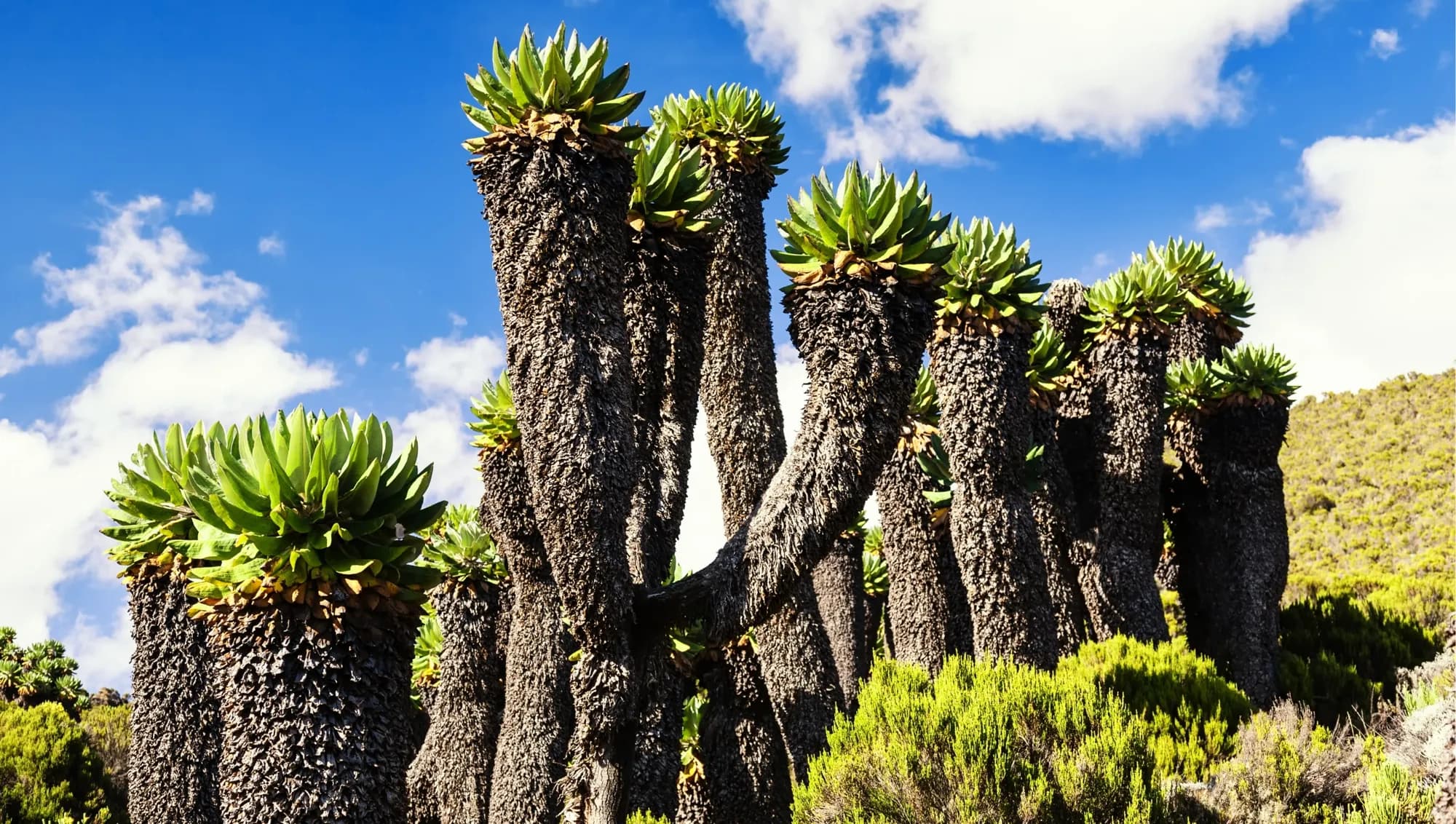
Day two is steeper and more exposed. Above the forest, the ridge narrows through giant heather with drops on either side and one short scramble. The views of the Western Breach and the southern glaciers are some of the best from any approach. Then the path flattens into the Barranco Valley and joins the main southern circuit.
Days three to six follow the same trail as Machame and Lemosho: the Barranco Wall, Karanga, Barafu, summit night and the Mweka descent.
Summit night
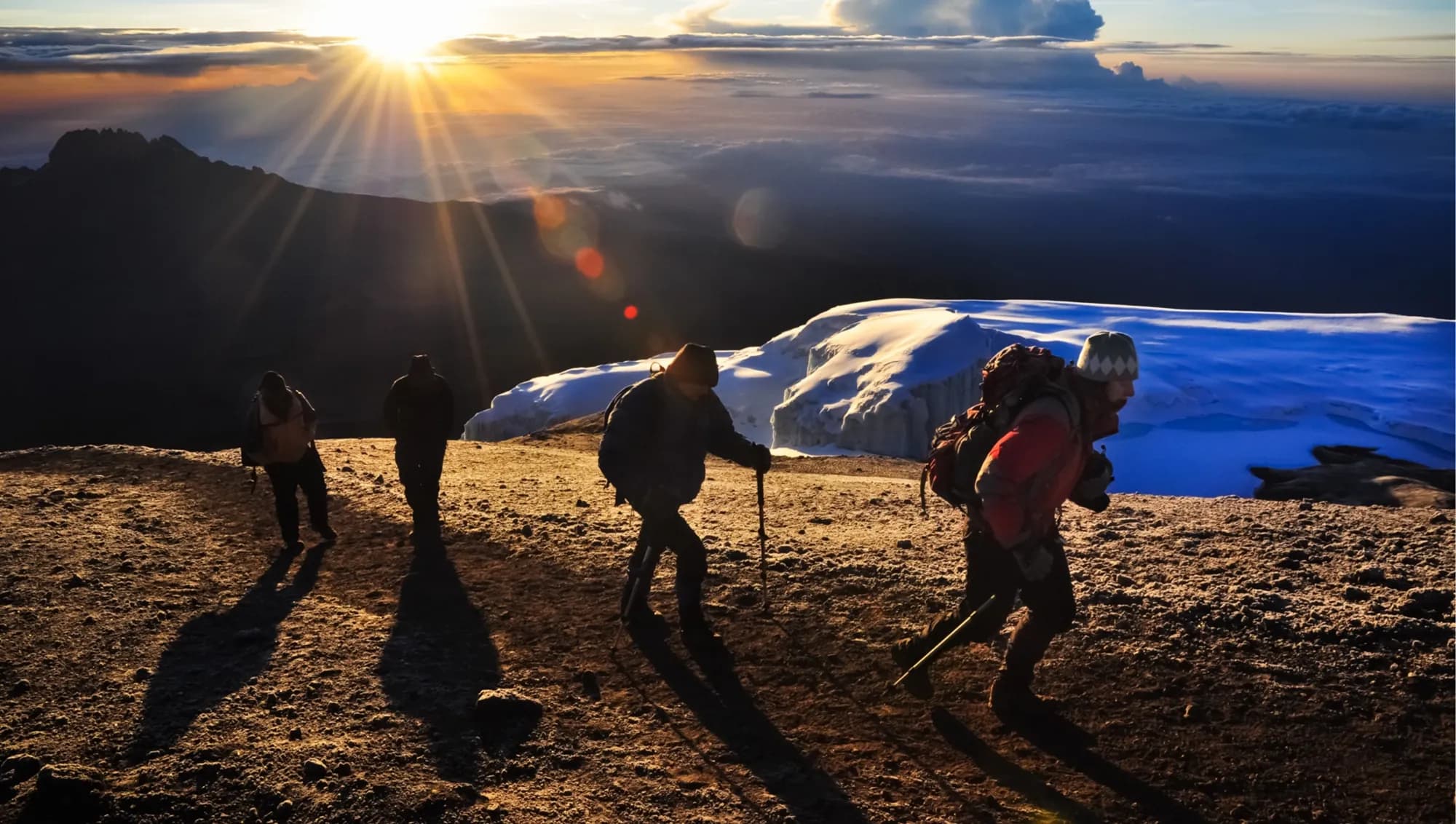
Your guide wakes you at Barafu at about 11 p.m. You leave around midnight and climb by headlamp up switchbacks of scree and frozen gravel to Stella Point, 5,756m (18,885 ft), gaining about 1,080m (3,550 ft) in five to seven hours. Uhuru Peak is a further 45 to 60 minutes along the crater rim. Temperatures are typically −10°C to −20°C (14°F to −4°F) before wind chill.
After the summit you descend to Barafu, rest and eat, then continue down to Mweka Camp. Summit day is 10 to 14 hours of walking in all. On Umbwe, your guide will watch you especially closely on this night; climbers on fast itineraries are more likely to need to turn back. Our planning guide's summit-night section walks through it hour by hour.
Best months to climb Umbwe
- January to early March and June to October are the best months. The forest ridge is driest and the views clearest.
- April, May and November are the rainy months. The steep, rooty trail becomes slippery, and we generally advise against Umbwe then.
See best time to climb Kilimanjaro for a monthly view.
How to prepare for the Umbwe route
Umbwe asks more of your legs than any other route. Day one gains about 1,340m (4,400 ft) on a steep, rooty path, so train on the steepest hills or stairs you can find, carrying a daypack of 6–8kg (13–18 lb). Aim for sessions of 1,000m (3,300 ft) of ascent in a few hours, and practise stepping down with control: the Mweka descent and summit day are long.
The bigger question is your altitude history. If you haven't been above 4,000m recently, consider a pre-acclimatisation trek before the climb, or choose a longer route. Be honest with us about your experience when you book; we'd rather move you to Machame than see you turn back at Barafu. Our training guide has a 12-week plan.
What's included
Your price covers park, camping and rescue fees and VAT; a KPAP-compliant crew; all mountain meals and drinking water; tents, mats and a mess tent; pulse-oximeter monitoring; and transfers to Umbwe Gate and back from Mweka Gate. See the full list below.
You bring your own sleeping bag (or rent one), trekking gear and crew tips. See our Kilimanjaro gear list and tipping guide.
How we keep you safe on a fast ascent
Because Umbwe ascends so quickly, the chance of altitude sickness is higher than on longer routes. Mild acute mountain sickness (headache, nausea, poor sleep) is expected. High-altitude cerebral edema (HACE) and pulmonary edema (HAPE) are rare but dangerous, and the treatment is descent.
- Guide team: a lead guide with assistant guides, so one can turn back with a climber while the group continues.
- Daily pulse-oximeter checks: blood-oxygen saturation, pulse and symptoms, recorded every day.
- Firm turnaround rules: worsening headache despite painkillers, confusion, loss of balance or breathlessness at rest means descent.
- Evacuation: the park rescue fee is included. Your travel insurance must cover trekking to 6,000m (19,700 ft) and helicopter evacuation.
Discuss acetazolamide (Diamox) with your doctor before you go; on a route this fast, it is a conversation worth having. Our altitude sickness overview explains the warning signs.
Porter welfare
Umbwe's steep first two days are hard on porters too, carrying tents, food and duffels up the same root-laddered ridge. The Kilimanjaro Porters Assistance Project (KPAP) standard is a maximum load of 20kg (44 lb) excluding the porter's own kit, three meals a day, proper sleeping gear and shelter, and wages paid promptly after the climb (KPAP guidelines). We follow it on every climb. Ask any operator whether it is a KPAP partner before you book; our sustainability page explains how we work with our crews.
- Steepest standard route
- Shortest distance to the summit
- Very low traffic on the first two days
- Joins the Machame and Lemosho trail at Barranco
- Best for experienced trekkers with prior altitude experience